
Brainspotting FAQs

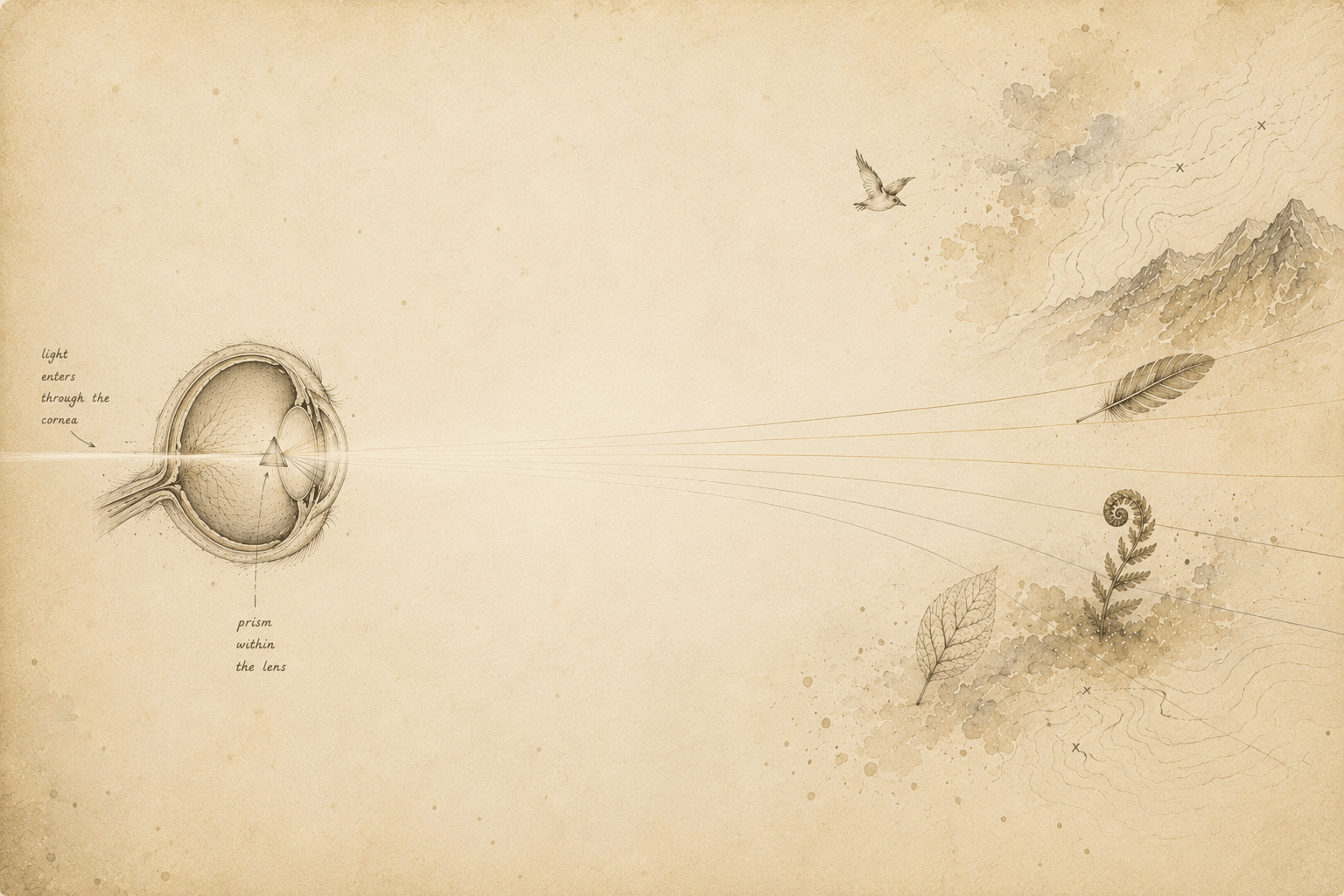
Brainspotting is a trauma-informed brain-body therapy that helps people process unresolved experiences through the connection between eye position, the nervous system and focused awareness.
what is all this stuff?
where you look affects how you feel
If Brainspotting sounds a little strange to you...
You're in good company.
One of my clients exclaimed “it sounded hokey but I do actually feel different!” .. In this economy, I’ll take any compliment I can get.
Ever wonder why when we get emotional we often glance away in the distance in order to compose ourselves?
And when we ‘zone out’ why do we pick that particular spot to focus on? Is it random or are we drawn to something there?
At first glance Brainspotting can seem almost too simple to work. Looking at a point with your eyes while noticing what's happening in your body doesn't sound like much.
And yet, the deeper you understand the brain and nervous system, the more beautifully it begins to make sense.
Let's dive in.
Back down the rabbit hole we go!
What is Brainspotting?
Brainspotting is a brain-body therapy based on a beautifully simple idea:
Where you look affects how you feel.
Developed by David Grand in 2003, Brainspotting helps identify specific points in your visual field that allow us to access unprocessed experiences held in the deeper, subcortical parts of the brain. By holding your gaze on one of these "brainspots," your nervous system begins to process what words alone often can't reach.
Although Brainspotting is a modern therapeutic approach, the experience itself feels remarkably ancient. Throughout history, healing traditions across many cultures have understood that deep healing often happens through focused attention, altered states of consciousness, presence, stillness and the body's innate wisdom. In many ways, Brainspotting brings together modern neuroscience with something humanity has intuitively known for thousands of years.
What does it work with?
Brainspotting is especially effective for trauma, anxiety, grief, chronic stress, emotional overwhelm, performance blocks, and experiences that feel "stuck."
Sometimes we simply can't think our way through something because it wasn't stored as a thinking problem.
Brainspotting allows the deeper brain and nervous system to complete processes that were interrupted by overwhelm, often without needing to analyse every detail.
Who is it for?
Brainspotting is particularly helpful if you've ever found yourself saying:
"I know why I feel this way... but nothing changes."
It's also wonderful for people who don't always have words for what they're experiencing.
Sometimes the body remembers long before the mind understands.
When do I use it?
I use Brainspotting whenever I sense that talking has taken us as far as it can.
Sometimes we'll spend an entire session Brainspotting.
Sometimes we'll weave it together with hypnosis, somatic experiencing or psychotherapy.
Like every modality I use, it isn't the destination.
It's simply another doorway into healing.
Why does it work?
Brainspotting works from the understanding that emotional pain, trauma and survival responses are often organised below conscious awareness.
By combining focused eye position, mindful awareness, body sensations and deep therapeutic attunement, the brain naturally begins processing experiences that have remained unresolved. Rather than forcing change, we create the conditions where your own nervous system can do what it has always wanted to do: heal.
What does it feel like?
From the outside, Brainspotting doesn't look like much.
We find a point in your visual field.
You rest your gaze.
Then we listen.
Some people notice body sensations.
Others experience emotions, memories or images.
Sometimes nothing obvious happens at first, and that's okay too.
Brainspotting often unfolds quietly. The shifts can feel subtle in the moment, only to become obvious over the days and weeks that follow.
Like much of my work, it asks very little from you except curiosity and a willingness to stay present with yourself.
Why I Love It
I love Brainspotting because it beautifully bridges science and mystery and similarly to hypnotherapy, it is fast! Sometimes even faster than hypnosis (oh now I’m feeling guilty that I’ve betraying my first love… but you know I’ve said it so many times, its about the healing not the modality)
On one hand, it's grounded in the relationship between eye position, the nervous system and the deeper brain. On the other, the experience reminds me of something much older. It carries the same qualities found in contemplative practice, deep meditation, hypnosis and many Indigenous and shamanic traditions—a quiet trust that when we become still enough, the body and psyche know exactly what they need to do.
Brainspotting reminds us of the innate wisdom we hold within. When the space is held for us, we can do things that we never thought we would do. We stop trying to outsmart ourselves. We become deeply present. And from that place, healing often unfolds in ways that continue to amaze me.
Frequently Asked Questions
Before Your Session
What is Brainspotting?
Brainspotting is a brain and body-based therapy developed by Dr. David Grand in 2003.
It uses specific eye positions—called brainspots—to access experiences, emotions and memories that are stored beneath conscious awareness.
Rather than trying to think your way through a problem, Brainspotting helps your brain process it naturally.
You could think of it as allowing your nervous system to finish conversations that were interrupted long ago.
How does looking at a spot help?
Where you look affects what's happening in your brain.
Certain eye positions appear to connect with specific neural networks involved in memory, emotion and survival responses.
When we find a brainspot connected to an issue you're working on, your brain begins processing it in much the same way your body naturally heals a physical wound.
It already knows what to do.
We simply create the conditions for it to happen.
Is Brainspotting scientifically supported?
Yes.
Brainspotting is a relatively young therapy compared with hypnotherapy, so the research base is still growing. Even so, the early evidence is very encouraging, particularly for trauma, anxiety, PTSD, performance, emotional regulation and nervous system healing.
It's now used by psychologists, psychotherapists, physicians and elite performance coaches around the world.
As with all of my work, I encourage curious minds to explore the research for themselves.
If you're a science nerd (my favourite kind of nerd), try searching:
scholarly articles Brainspotting and[insert your condition]
You'll find a growing body of fascinating research.
Is this similar to EMDR?
They share some similarities.
Both therapies work with the brain, eye position and the nervous system.
Brainspotting actually grew out of observations made during EMDR before developing into its own distinct approach.
In my experience, many people describe Brainspotting as feeling gentler, less structured and more intuitive. Rather than following a predetermined protocol, we allow your brain and nervous system to lead the healing process.
Do I need to talk?
Not very much.
One of the reasons I love Brainspotting is that it allows healing to happen without needing to explain every detail of your story.
That's particularly valuable when words feel too difficult, too exhausting or simply aren't available.
Your brain and body often know far more than language can express.
Will I lose control?
No.
You're awake, aware and in charge throughout the session.
We'll regularly check in with what's happening for you, and you can pause, move or stop at any time.
Brainspotting isn't about doing something to you.
It's about creating the right conditions for your own brain to do what it already knows how to do.
Do you take insurance for Brainspotting?
Unfortunately, no.
I don't currently bill insurance for Brainspotting or any of my therapeutic services.
There are a few reasons for this. Many insurance providers simply don't reimburse for Brainspotting, despite its growing evidence base and increasing use by trauma therapists around the world. I also work outside of the licensed medical model, which means insurance billing isn't something I offer.
Working outside the insurance system allows me to offer longer sessions, integrate different modalities as your healing unfolds, and tailor our work to you rather than to the limitations of an insurance code or treatment protocol.
If cost is something you're concerned about, let's talk. We'll discuss the best option for your situation during your consultation.
During Your Session
What does Brainspotting feel like?
Usually...
Quiet.
Some people notice emotions rising to the surface.
Others become aware of physical sensations they've never noticed before.
Some remember forgotten experiences.
Others simply sit in stillness while their nervous system quietly gets to work.
It can be surprisingly subtle.
It can also be profoundly transformative.
Every experience is different because every nervous system is different.
There isn't a "right" way to do Brainspotting.
What does Brainspotting Look like?
Usually, it's nothing more exciting than the end of a pointer, a spot on the wall, or a place in your visual field.
The magic isn't in the object itself. It's in the relationship between that eye position and your nervous system.
It’s pretty underwhelming to witness from the outside 😂 but a lot of energy is moving within.
Do you combine Brainspotting with hypnotherapy?
Absolutely.
Because they each do something different—and together they're incredibly effective.
I often begin with Brainspotting because it's one of the fastest ways I've found to access the subconscious mind. Rather than talking around an issue, we can often arrive at the root surprisingly quickly.
Sometimes that's all we need.
The brain processes what it's been holding, your nervous system completes what it couldn't complete before, and the work naturally comes to a close.
Other times Brainspotting opens the door to something deeper.
That's where hypnotherapy becomes invaluable.
Once we understand what's underneath the pattern, hypnosis allows us to gently untangle old beliefs, transform the meaning of past experiences, reconnect with younger parts of yourself, and build new subconscious patterns that support the life you're creating.
I think of Brainspotting as helping us find the doorway.
Hypnotherapy helps us walk through it.
Some sessions are almost entirely Brainspotting. Others are almost entirely hypnotherapy. Many become a gentle weaving of both.
I follow where your nervous system leads.
How many Brainspotting sessions will I need?
It depends on what we're working with.
Some people experience significant relief from a single focused session. Others use Brainspotting as part of a longer healing journey, especially when working with complex trauma, chronic patterns or multiple life experiences.
Rather than deciding in advance how many sessions you'll need, I prefer to let your nervous system lead. We'll check in as we go and decide together what feels most supportive.
Healing isn't a race.
It's a relationship with yourself.
Can Brainspotting be done online?
Yes.
Brainspotting works beautifully both in person and online.
We'll simply adapt the way we identify your brainspot using your screen and camera. Once we find the appropriate eye position, the process is much the same.
Many clients are surprised by how effective online Brainspotting is, and some even prefer working from the comfort and familiarity of their own home.
Like all of my work, what matters most isn't where you are.
It's that you have a quiet, private space where your nervous system feels safe enough to do what it does best.
Curious Minds
Do I have to understand why it works for it to work?
Thankfully, no.
One of the things I find fascinating about Brainspotting is that even the people who developed it don't claim to fully understand why it works. They know it works. They continue to research how it works.
That's actually true of much of medicine and science.
Take sleep, for example.
We know sleep is essential. We know it strengthens memory, supports the immune system, regulates our emotions and allows the brain and body to repair themselves. We also know that without it, we quickly become unwell.
But we still don't fully understand why evolution gave us sleep in the first place, despite making us so vulnerable for nearly a third of our lives.
Science is wonderfully humble like that.
The more we discover, the more we realise there is still to learn.
I'm deeply interested in the science behind everything I do, and I also feel comfortable saying, "We don't know yet."
For me, that's not a weakness.
It's an invitation to stay curious.
Your brain has been healing injuries your entire life without asking your permission or explaining itself to you.
Sometimes healing begins simply because we create the right conditions and allow your remarkable nervous system to do what it already knows how to do.
Why do you love Brainspotting?
I love Brainspotting because it continually reminds me that healing isn't something we have to force.
Your brain already knows how to heal.
Just as a cut on your hand begins repairing itself without you consciously telling each cell what to do, your nervous system has an innate capacity to process what became stuck.
Brainspotting simply helps us get out of the way.
It's one of the most elegant therapies I've ever encountered because it asks so little of the thinking mind while inviting so much wisdom from the body.
To me, it beautifully bridges the worlds of neuroscience and ancient healing traditions.
Although Brainspotting is a modern therapeutic approach, it echoes something humanity has known for thousands of years: where we place our attention matters.
It reminds us that healing isn't something we manufacture.
It's something we remember how to allow.
My question isn’t on here.
You found one!
Either I've forgotten to include it, or you've asked me something nobody has asked before.
Either way, I'd love to hear it.
Send me a message. The best Rabbit Hole pages are written one great question at a time.

so… are we doing this?
Book a Free Consultation.
If you've made it this far, you might be wondering which of these approaches is right for you.
You know my answer, you don't need to know. (While also if you’re like ‘that sounds cool’ then we absolutely should go there!)
Most people don't arrive saying, "I need Brainspotting," or, "Today's the day for hypnotherapy." They come because they're anxious, grieving, burnt out, stuck, or simply know that life could feel different.
My job is to understand your story, listen to your nervous system, and weave the best approaches that support your healing.
The modality is never the healing. You are.
These are simply the tools we use to help you remember what has always been there beneath the survival, the stress and the stories you've had to carry.
If you're still curious about working together, the best place to begin is a consultation. We'll talk about what's bringing you here, answer your questions, and together decide what feels like the right next step.
You don't need to have it all figured out.
That's what I'm here for.